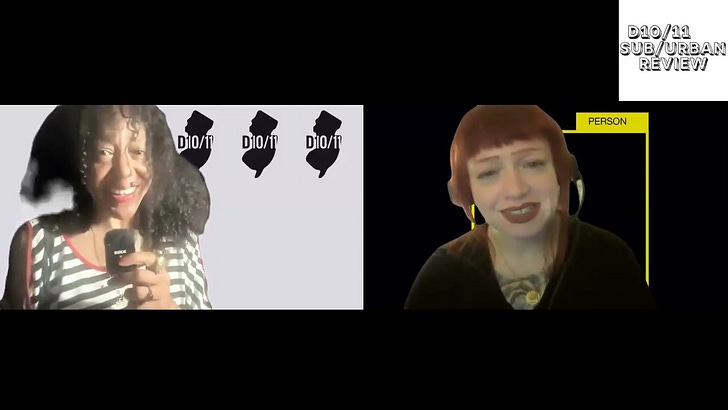

The third time sitting down with Carlos Acosta for our latest conversation, I was no longer interested in the narrow question of what happened to him.
Yes, of course, facts and timelines matter and he matters.
What draws me to this story is how this relates to power. Space is physical, but it is also social.
When Acosta emerged as a leader in the campaign to end immigrant detention in McHenry County, he was often portrayed as a respectable reformer, a civic participant operating within the accepted boundaries of public debate. He was educated, articulate, and engaged in the democratic process. He spoke the language of public service.
A theme of this series is how quickly boundaries shift.
A formerly model “minority” becomes a threat when it dissents.
Disagreement becomes something entirely different when one is racialized— and hegemony likes to dole out an especially sadistic brand of punishment when you turn out to not be one of the “good ones.”
We discussed organized labor. A former professor of mine, Anwar Shaikh, stated that at times unionism can be reformist. Being in a union allows workers to tolerate capitalism’s oppression.
Acosta and I discussed how institutions often celebrated as vehicles for worker empowerment can also function as stabilizing forces within existing power structures. The issue was not whether unions are good or bad, but whether solidarity is always directed toward fellow workers or whether it sometimes becomes solidarity with the hegemonic institution itself.
This is not a story unique to immigration detention.
Across American history, workers have often found themselves caught between two loyalties: solidarity with people and solidarity with institutions.
Also, the power of media. At first, when Acosta was elected, the media portrayed him as the model minority; as he became more vocal in challenging hegemony, his image changed: his skin was darkened, his face looked meaner, and finally, the mug shot.
You Google him now, and that is what comes up.
Now he was the bad “other.”
Who we are perceived to be is greatly determined by media and institutional framing.
Who gets read as a community leader?
Who gets read as an outsider?
Who is afforded the presumption of legitimacy?
Racialized people are instrumentalized. There are no good stereotypes, only ones that serve power and ones that do not. Legitimacy for people not considered quite human demands constant negotiation.
You will be deemed dangerous when you encroach upon power.
Ultimately, Acosta’s story is compelling not simply because he became involved in a controversial political struggle.
It is that his experience forces us to confront a difficult possibility.
There are grants that encourage and fund participation in democracy and everyone says, “We need more civic engagement.”
Hegemony claims it wants more people to be involved.
But what happens when people participate and actually win?
What happens when they successfully challenge an entrenched system that is an existing revenue stream?
The aren’t official statements.
They are found in the aftermath, I was bankrupted after a media fight with SoFi stadium, I like Carlos could have walked away but I COULD NOT.
So in the aftermath, Carlos Acosta’s story becomes more than a story about immigration detention. It becomes a story about power, punishment, and the uncomfortable relationship between democratic participation and institutional preservation.
This isn’t about what he was convicted of, which was unprecedented.
What I want to know from here —why does it appear that consequences for challenging power so severe when the (wrong) people are victorious?
Guest Bio
Carlos Acosta has been active in the social service field since 1990. He is currently the Owner & Lead Organizer/ Counselor of Phoenix Bilingual Services. He previously served as Staff Clinician at Blair Counseling and Mediation (Crystal Lake, IL), Senior Therapist with Irene Corzo and Associates (Lake Geneva, WI), and Onsite Crisis Counselor with the McHenry Co. Crisis Program. Carlos co-founded and served as Executive Director of the McHenry County Latino Coalition, the area’s leading advocacy group for Latino residents, until its dissolution and closure in 2009.
Carlos Acosta has served his community in various capacities. Carlos served as an elected McHenry County Board member (5th District) from 2018 to 2022. Carlos was previously an appointed member of the Woodstock Plan Commission (2004 - 2010). Carlos also served on the Board of Directors of the United Way of McHenry County (2003 - 2008), Leadership Greater McHenry County (2004 - 2008), and the McHenry County Community Foundation (2003 - 2007).
This is part three in the series The Geography of Retaliation: What Happens When They Win.
The Geography of Retaliation: What Happens When They Win is a four part seriries. Carlos Acosta helped lead a campaign against an ICE detention center in McHenry County, Illinois, whose momentum led Governor J.B. Pritzker to sign the Illinois Way Forward Act in August 2021. Way Forward strengthened immigrant protections by ending local ICE detention contracts and limiting police collaboration with federal immigration enforcement. This act updated the Illinois TRUST Act and the Voices of Immigrant Communities Empowering Survivors (VOICES).
One would think that this victory would be a testament to community power; it was, but it also had other impacts. It was the beginning of a nightmare for Carlos. This series explores the blurred line between political prisoner and criminal prisoner. It is a line that haunts struggles for justice everywhere. It also amplifies the question of who is permitted to shape space and power, and what happens to those who challenge those hegemonic institutions.
Please subscribe and share.
Carlos Acosta has been active in the social service field since 1990. He is currently the Owner & Lead Organizer/ Counselor of Phoenix Bilingual Services. He previously served as Staff Clinician at Blair Counseling and Mediation (Crystal Lake, IL), Senior Therapist with Irene Corzo and Associates (Lake Geneva, WI), and Onsite Crisis Counselor with the McHenry Co. Crisis Program. Carlos co-founded and served as Executive Director of the McHenry County Latino Coalition, the area’s leading advocacy group for Latino residents, until its dissolution and closure in 2009.
Carlos Acosta has served his community in various capacities. Carlos served as an elected McHenry County Board member (5th District) from 2018 to 2022. Carlos was previously an appointed member of the Woodstock Plan Commission (2004 - 2010). Carlos also served on the Board of Directors of the United Way of McHenry County (2003 - 2008), Leadership Greater McHenry County (2004 - 2008), and the McHenry County Community Foundation (2003 - 2007).
Carlos earned his B.S. in Leisure Studies at the University of Illinois at Urbana-Champaign and his M.A. in Social Service Administration at the University of Chicago.